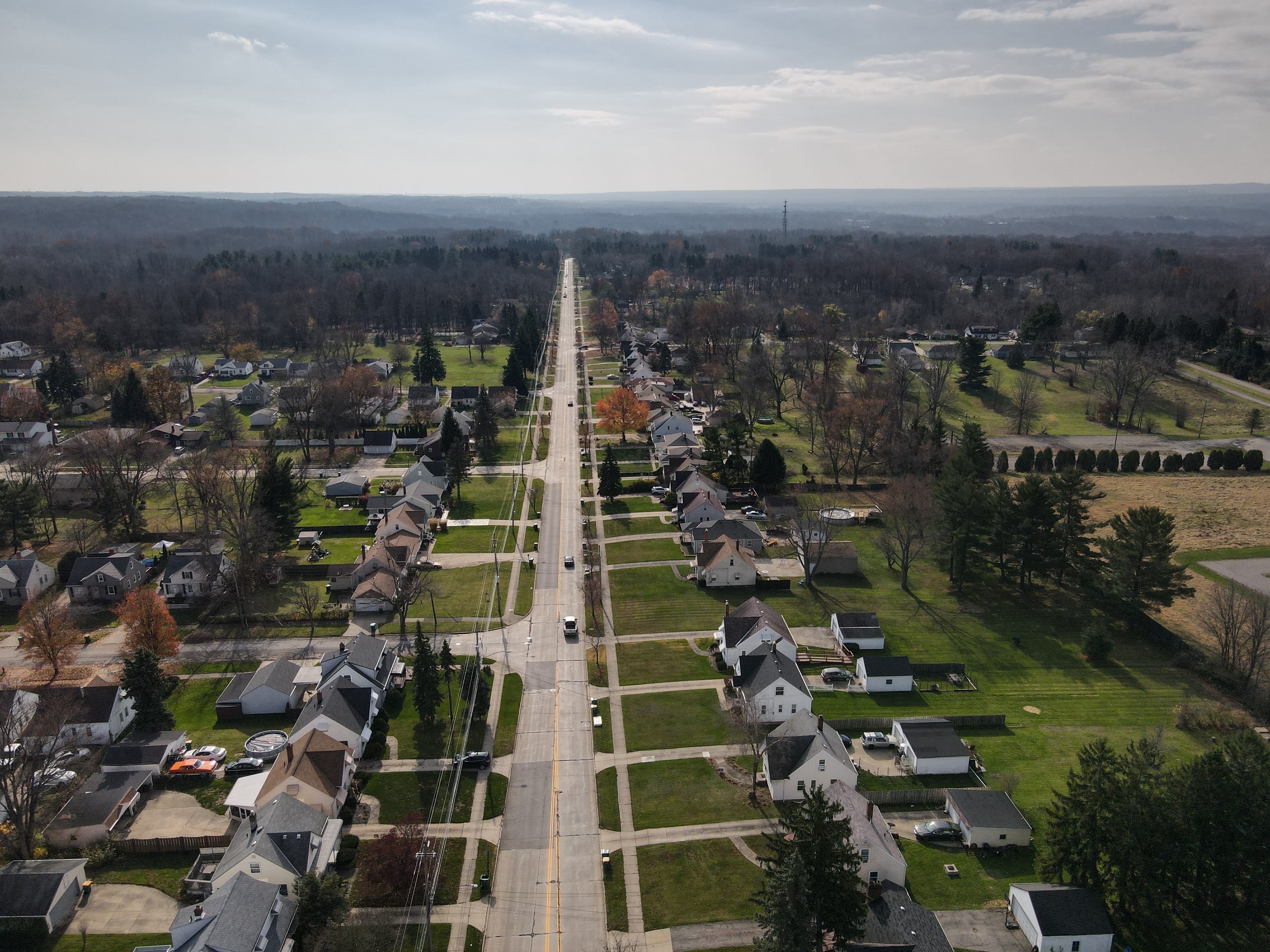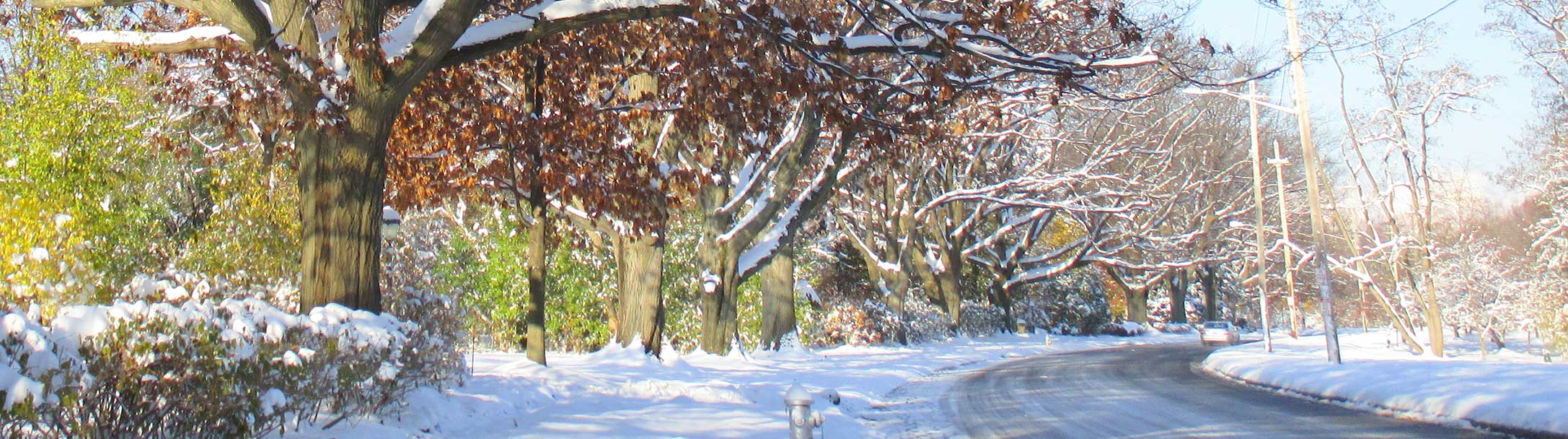
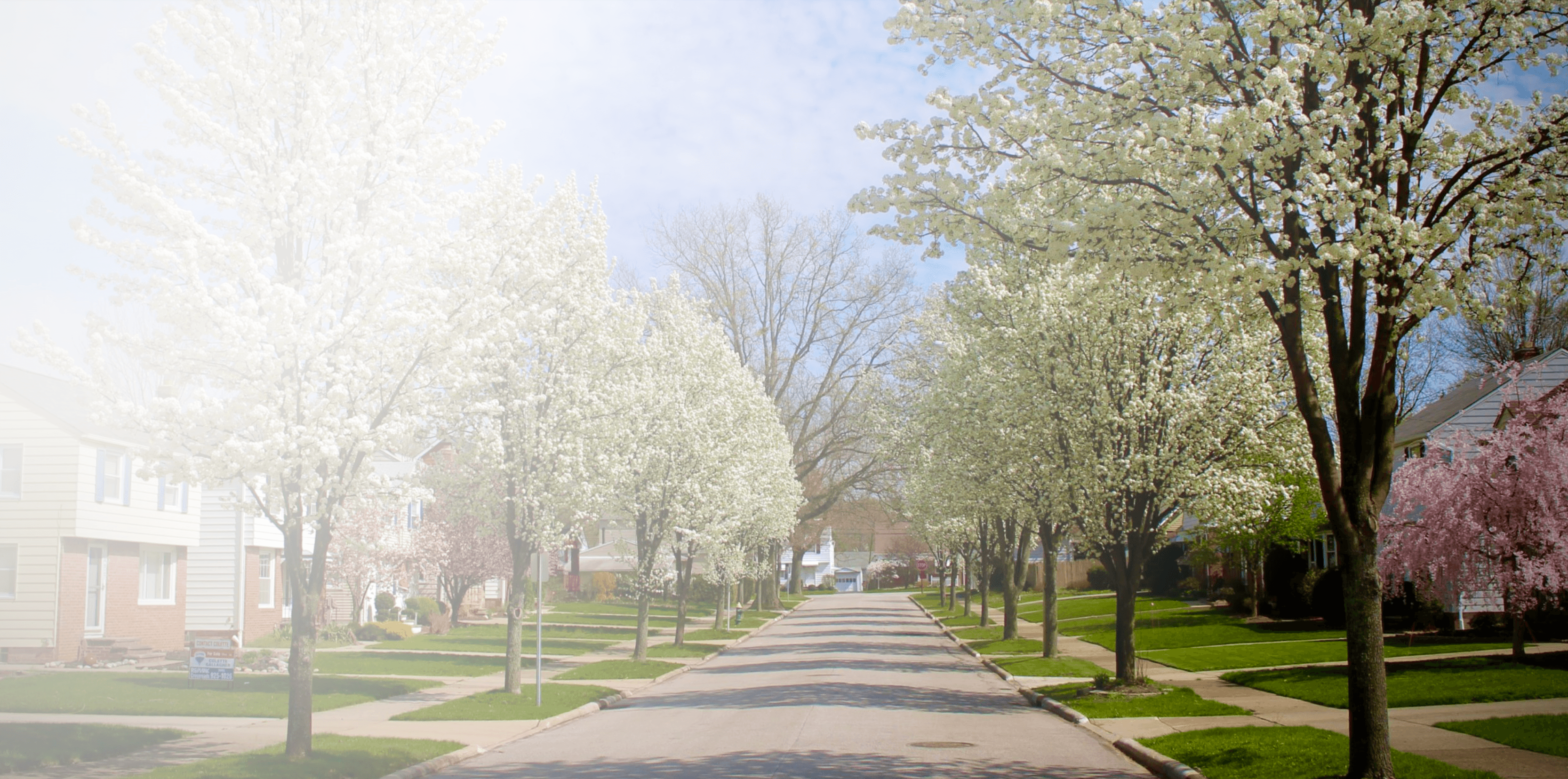
Drive east on Mayfield Road past the Cleveland Heights line and the streetscape changes almost immediately. The lots get a little deeper. The trees — big oaks and sycamores planted when Truman was president — arch over the side streets. Brick Tudors and center-hall colonials sit shoulder-to-shoulder with tidy postwar capes. You've crossed into South Euclid, a 4.7-square-mile inner-ring suburb that has been quietly reinventing itself for the better part of two decades.
South Euclid is one of those Cleveland places that doesn't shout. It doesn't have the boutique-row foot traffic of neighboring Cleveland Heights or the manicured commercial spine of Beachwood. What it has, in our experience as property managers working all over the east side, is a kind of stubborn livability: walkable blocks, real housing stock, four genuinely good city parks, and a population that is — by any reasonable measure — one of the more racially and ethnically integrated suburbs in Ohio.
If you're weighing a move to the east side, or you're a parent looking for something with a little more elbow room than the city offers but still close to everything, South Euclid deserves a careful look. Here's the on-the-ground tour.
The basics
- Population: ~21,883 (2020 Census), with roughly 8,900 households (U.S. Census)
- Distance to downtown Cleveland: about 11 miles southwest, typically 20–25 minutes via Mayfield Rd. or I-271 + I-90
- School district: South Euclid-Lyndhurst City Schools (SEL), serving both cities
- ZIP codes: primarily 44121, with a small northern sliver in 44143
- Borders: Cleveland Heights (west), Lyndhurst (east), Richmond Heights (north), University Heights (south), with corners touching Cleveland, Beachwood, and Euclid
- Housing stock: overwhelmingly mid-century single-family — brick Tudors, colonials, capes, and ranches built between roughly 1925 and 1960, on lots typically 50–60 feet wide
- Area: 4.66 square miles, every acre of it incorporated and residential or commercial (Wikipedia)
A short history
South Euclid started as district two of the original Euclid Township, the township Moses Cleaveland named in 1797 after the Greek mathematician — apparently the unofficial patron saint of surveyors (Encyclopedia of Cleveland History). For most of the 1800s it was farms and a bluestone quarry. Duncan McFarland opened the first quarry along Euclid Creek in 1867, and by the 1870s the Forest City Stone Company had consolidated operations into one of the region's biggest. The old quarry pits are why the city has a park called Quarry Park today, and why the area's old northern village was called Bluestone.
The village incorporated in 1917 with Edward C. Foote as its first mayor. Cityhood came in 1941, with WPA money helping the new municipality through the tail end of the Depression. Then came the postwar boom: the population quintupled between 1940 and 1970, peaking at 29,579, as Cleveland families pushed east into the so-called Hillcrest suburbs (named, oddly, for an old telephone exchange).
The story since the 1980s has been about managing maturity. The population has eased back to the low 20,000s — there's simply no more land to build on. Meanwhile the demographic mix has changed dramatically. South Euclid was 75% non-Hispanic white in 2000; by 2020 the city was 53% Black, 37% white, with growing Hispanic, Asian, and multiracial populations and longstanding Italian, Jewish, and Russian-speaking communities (Wikipedia). The transition didn't happen by accident — fair-housing organizations worked for decades to make integration possible — and it's one of the things current residents are quick to point to with pride.
In 2009 the city helped launch One South Euclid, only the second suburban community development corporation in the region after Lakewood Alive. One South Euclid used federal Neighborhood Stabilization Program funding for housing rehab, sustainable infill construction, and converting vacant parcels into pocket parks and community gardens — work that's still visible block by block today.
Schools
South Euclid shares its school district with neighboring Lyndhurst. South Euclid-Lyndhurst City Schools runs a "grade-banded" structure that's a little different from the typical neighborhood-elementary model:
- Adrian Elementary and Sunview Elementary (PreK–2)
- Rowland Elementary (3–4)
- Greenview Upper Elementary (5–6)
- Memorial Junior High (7–8)
- Charles F. Brush High School (9–12)
Brush is the lone high school for both cities, sitting just over the Lyndhurst line on Glenlyn Road with about 1,000 students (NCES). It has a long-standing reputation for strong arts and music programs, a competitive athletic department, and — more recently — career-pathway programming for students aiming at trades, healthcare, and entrepreneurship.
Families also have access to several area parochial schools and to private options nearby in Cleveland Heights, University Heights, and Beachwood. Notre Dame College, which had a campus in South Euclid since 1928, closed in 2024 for financial reasons — a loss the city is still working through in terms of what happens to the 50-acre site.
Parks & outdoors
For a city that's smaller than four-and-a-half square miles, South Euclid punches well above its weight on green space. The city operates four signature parks, plus a slice of the Cleveland Metroparks Euclid Creek Reservation:
- Bexley Park (1630 Wrenford Rd.) — the family hub: outdoor pool, a recently expanded "Playground of Possibilities" inclusive playground, a bike pump track, ballfields, and a pavilion you can rent.
- Quarry Park (711 S. Belvoir Blvd.) — split into Quarry North and South by Monticello Boulevard. Splash pad, playgrounds, ballfields, and one of the more popular fenced dog parks on the east side, with a separate small-dog section.
- Victory Park — got a full overhaul in 2021 with new sand volleyball courts and play equipment (cleveland.com).
- Oakwood Park — quieter, good for picnicking, plus the adjacent 21-acre Oakwood Green passive park preserved on the former Oakwood Club golf course.
- Euclid Creek Reservation — the southern reaches of the Metroparks property dip into city limits, giving residents quick access to wooded trails and the creek bed.
South Euclid was also ranked 10th of Ohio's 114 largest cities for walkability — a fact you feel walking from, say, the Bexley Park neighborhood down to Cedar Center on a Saturday morning.
Where to eat & shop
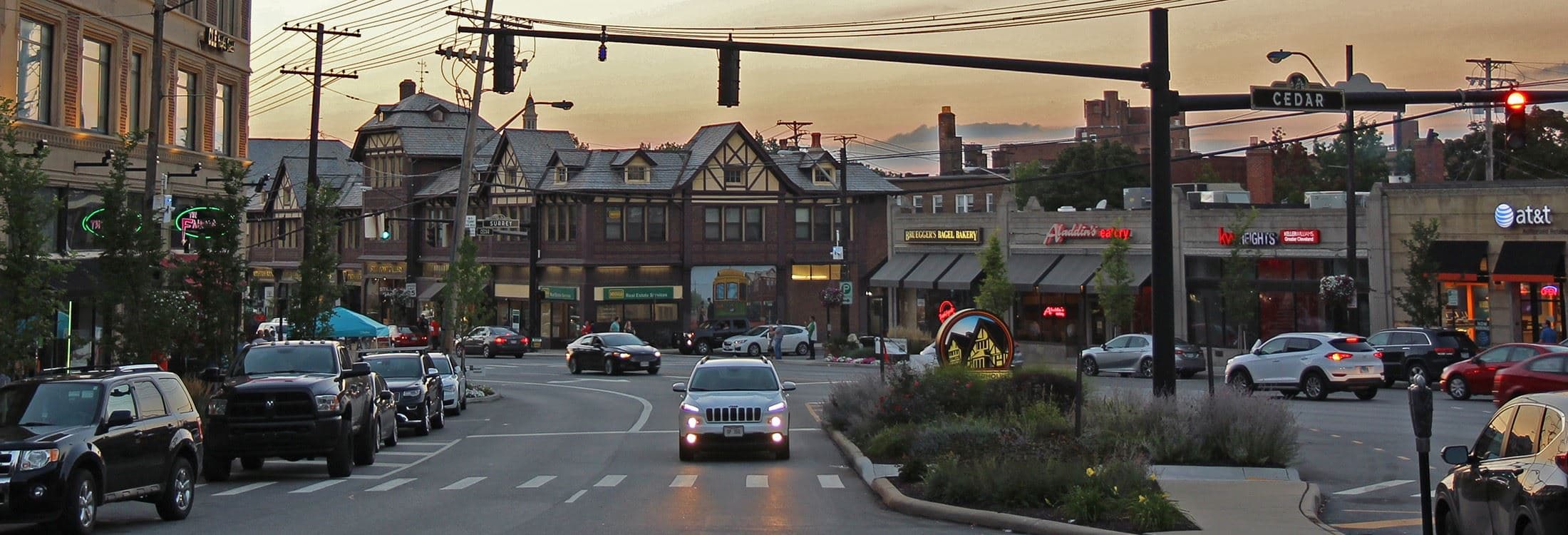
The two commercial spines are easy to learn: Cedar Road along the southern edge and Mayfield Road through the middle, with Green Road running north–south as the cross-town artery.
Cedar Center sits at Cedar and Warrensville Center Roads, straddling the South Euclid / University Heights line. The north side of Cedar Center was bought by the city, demolished, and rebuilt in the early 2010s as a mixed-use district — anchored today by Dave's Markets, with neighborhood standbys like Anatolia Café (Turkish-Mediterranean) and a rotating cast of restaurants, fitness studios, and services. The south side has the more traditional strip-mall mix: Marc's, longtime delis, dry cleaners, the kind of stuff you actually use weekly.
Mayfield Road is the more eclectic stretch. You'll find decades-old Italian bakeries, kosher and halal markets, family-run diners, and a steady churn of new restaurants reflecting the city's diversity. This is also the corridor One South Euclid is actively trying to remake into a true "downtown." In May 2025 the city adopted a new Mixed-Use Transit-Oriented Development zoning code aimed at the Mayfield-Green node (Cuyahoga County Planning Commission), and a senior living development at the former Maywood Center office building (4568 Mayfield Rd.) is in the works (cleveland.com). The city has also been pushing a walkability initiative through its business districts (cleveland.com, Feb 2025).
For bigger errands, Oakwood Commons on Warrensville Center near the Cleveland Heights line has a Walmart and the usual big-box satellites. And Legacy Village and Beachwood Place are a five-minute drive east.
Who South Euclid is for
After managing rental homes across Greater Cleveland for years, here's the honest pitch we give clients considering South Euclid:
- You want a real house, not a townhouse. Single-family detached with a yard, a driveway, and a basement is the default here. Lots are modest but real.
- You value diversity in a tangible, lived-in way. The city's mix of Black, white, Jewish, Italian, Russian-speaking, Caribbean, and immigrant families is genuine — not a marketing line.
- You want east-side access without east-side prices. You're within easy reach of University Circle's hospitals and museums, Case Western, the Heights, Beachwood, and I-271. Median home prices remain meaningfully below Cleveland Heights, Shaker, or Beachwood.
- You like a walkable street grid with mature trees. This is not a cul-de-sac suburb.
- You're okay with mid-century housing stock. Plaster walls, original hardwoods, smaller kitchens, one-car garages — charming, but budget for updates.
It's less of a fit if you want new construction, an HOA-managed community, or a yard bigger than a quarter acre. For that, keep driving east to Mayfield Village, Highland Heights, or Solon.
Looking for a South Euclid home?
We manage and lease single-family homes throughout South Euclid and the surrounding east-side suburbs — the brick Tudors near Bexley, the colonials off Belvoir, the postwar ranches up near Mayfield. If you're trying to figure out whether South Euclid is the right fit for your family, or you've already decided and just need to find the right house, we'd love to help.
Looking for a home in Greater Cleveland?
Milton PM manages quality family homes across Cleveland, Maple Heights, Garfield Heights, Cleveland Heights and surrounding communities. Get in touch with a real, local team.